Showing posts with label UK treatment for addicts. Show all posts

Monday, 4 March 2013

Getting Injectables Prescribed In The Uk

I'm currently in the process of helping a good friend who's having trouble with our local drug service. 

When I was using I know I could have done with someone on my side, advocating for me. So now I'm in a better position myself i thought I'd try and help.

So this is the situation, she is a long term user, around 20 years. IV heroin for most of it but speedballs, heroin and crack combined, for the last five years. Which I know from experience is a total bitch to kick. 
When I first started using, I used to hang with a guy that did both. He used to infuriate me because after hustling money, we'd go to score the heroin, I'd be chomping at the bit to use it! But this guy wouldn't do heroin without crack! Seriously, we'd have to wait around for hours sometimes for his crack dealer. He just point blank refused to do just the heroin and I just didn't get it! .... Fast forward 15 years and now I get it! I fell into the speedball trap too towards the end. It really is difficult to do just the heroin. It's just not the same. 
It's difficult to explain if you haven't experienced it, it's like toast without butter, or tea without sugar. Haha

It obviously also makes it that much harder to stop, you have a double whammy addiction!
I read somewhere about the physiological side of it. IV heroin or IV crack, alone, obviously induce a huge dopamine release, which gives the high. 
Put the two together however and the dopamine release is around 400% more!
It's an awful addiction to have, at least with just heroin, psychologically, you're on a pretty even keel. Yeah you have ups and downs, when you're sick and skint you feel crap but trust me, once you've been on speedballs you appreciate the difference. The crash after a day of using is just awful. It used to take me a week to recover from a speedball binge. Not even wanting to talk to anyone else, physically feeling awful but the psychological side of it is like nothing else. Well, maybe like an amphetamine come down,.. a bit..
When it's time to stop, you're not only battling cravings and physical symptoms of normal opiate withdrawal, you get the extra fun of cocaine cravings and withdrawal! Cocaine cravings are pretty intense on their own!
Like I said, double whammy! .... Why did you think it was a good idea to try a speedball again? ;)

So anyway, my mate is an old school addict. Been at it a long time, been in and out of rehabs and programmes. Spent the majority of her addiction on methadone, 180mg at the highest. In drug service terms anything over 60mg is classed as an 'optimised' dose. 60mg is believed to be the minimum to achieve a 'therapeutic effect', the 'optimised dose'. 
This has changed over the years, it wasn't too long ago that 60mg was considered a high dose!
Incredibly, in the United States, doses of up to 500mg daily aren't unheard of.
The most I have ever heard anyone being in here was 250mg. 

She tried subutex but didn't get on with it. Some people just don't get on with buprenorphine. It's a very different drug to methadone and heroin, pharmaceutically and subjectively. It's a semi-synthetic, partial opiate agonist/antagonist. 
It can feel quite 'chemically' to some people.  If you're used to full agonist opiates like heroin or methadone, the crossover to subs can be difficult. 

Right now she's frustrated with her treatment, she feels as though they have given up on her almost. A 'lost cause' .. It's very sad actually, this girl is an amazing person, really creative and kind. I've known her a long time, she's a little like me I guess, in that she's not really what you'd class as a 'junkie'. Having worked and supported herself, her kids and her habit most of her life. 
Like me, getting caught up in opiates using them almost like a sticking plaster, to deal with emotional pain. Opiates are great at numbing those painful memories some of us damaged people have. They were almost a natural progression for me, I'd spent most of my teens struggling with feelings and emotions that I just didn't have the tools to deal with. 

She's currently under the care of our local specialist addiction unit, at the hospital. This is where they send the people that don't respond well to traditional treatment, maintenance scripts which can be given by a key-worker at a community drugs service. 
They are, by definition, there to provide a specialist service, in my eyes you would think that that involves using a wider range of medications and psycho-social interventions like psychotherapy and family counselling. 

About a year ago, while I was still there actually, the budget was slashed.
Lots of NHS services were cut, obviously addiction services are an easy and obvious target and therefore one of the first to feel the pinch. 
The consultant that ran the unit for years was fantastic, I've written about her before I think. A really amazing, caring doctor. 
Part of the cuts included her having to incorporate the alcohol unit into the drugs unit. Splitting her time overseeing both units and pulling back on direct patient contact.  She wasn't prepared to make this compromise and ended up resigning, it was a travesty actually and makes me mad to this day. Things at the SAU really went downhill after she left. Every week I'd hear clients moaning in the waiting room, keyworkers would change from week to week, it became impossible to see a doctor and you could just tell that most of the staff couldn't really care anymore, they'd be out the door by 4.30 whereas in the past stayed til gone five.

Rather than clients seeing doctors, nowadays everyone sees a keyworker, no matter what their needs or level of priority. The keyworker is like the liaison between the client and 'the team'
The team consists of registrars, keyworkers, one psychologist (to cover every client), the consultants, the manager, nurse and various other workers. They meet weekly to discuss the clients. 

This may seem a sensible idea, and certainly streamlines things, but at what cost?
I know for me, when I was still there, I just felt a total lack of care or even interest. I had a different keyworker every appointment at one stage. They were obviously temporary agency staff, with no specialist training in the drugs field. One lady In particular was so obviously uninterested in me I played around a little and told her I was injecting benzos and that I was self harming again. To see her reaction. There was none.. She just wrote it down and moved on. I don't know what I was expecting really, maybe 'are you ok?' I guess..

Back to my mate.. She asked me to look up the government guidelines for injectable opiate prescribing. 
I have an interest in this too because I was looking into it for myself before I stopped using. 
It's a bit of a grey area, it's not a common practice, but technically it's possible to get an injectable script. The studies looking at injectable vs oral prescribing show positive outcomes, there is plenty of evidence from Europe, we all know about Zurich's incredible results with 'needle park'. They had a huge and very visible heroin problem some years ago, addicts would (infamously) stand out in the open, injecting eachother. 
They rather bravely, implemented an injectable opiates policy. Set up a clinic where addicts could go and get a legal, safe and regular supply of heroin. There were conditions attached of course, the addicts had to attend the clinic twice daily and inject in front of staff where they could be monitored to ensure they were injecting safely and to stop overdoses. Incredibly they cut their new addict numbers by around 80%. By taking the 'glamour' out of IV drugs, they essentially stopped people wanting to start using. They have similar places in Canada although these are just safe spaces to inject, with staff on hand dealing with OD's and to offer safer injecting advice. They don't prescribe here just supervise. Many many lives have been saved and local HIV and Hep C rates have dropped. 
Portugal have recently decriminalised the use of drugs, where before an addict would be punished through the courts and prison system, they started instead to offer them a place in rehab, or opiate replacement therapy. Again, they have proven the concept and cut drug related crime dramatically.
The glaringly obvious point here is that people will use drugs wether they are illegal or not, criminalising and punishing people for using DOESN'T WORK. Putting programmes and systems in place to help drug users is the only way to make a real difference. 

Although I don't personally need medical treatment anymore, it's not long ago that I did, and I feel strongly about the UK's and the rest of the western world's outdated and useless drug policies. The 'war on drugs' hasn't, and never will, work. 
I'm hopeful that things will change though, there is a small but rapidly emerging worldwide movement towards the decriminalisation of drugs. 

UK drug policy does allow for the off label prescription of injectable opiates for addiction. 
A home office licence is required to prescribe diamorphine though and there are only around 90 doctors that hold one. 
No licence is required to prescribe methadone amps though.
I feel my mate is a good candidate for injectable prescribing, after reading the NTA and NICE guidelines she fits the criteria. The only other things in the way are practical things like being able to demonstrate good injection technique and having good venous access. It's also necessary to monitor people closely who start this treatment. Especially during induction. It may not be logistically possible to prescribe at your local unit and this will have an impact on their decisions to provide injectables. 
Essentially though, the final decison rests with the prescribing doctor.  it literally is as simple as the personal prejudice, preference, experience and maybe even the whim, of the consultant. 
If you can demonstrate that you fulfil the criteria and you can show a good case for a realistic reduction in harm and improvement in illicit drug use, then there is really nothing stopping you pursuing it. 

Cost is another major factor, we all know oral methadone is cheap as chips. As low as 20p per dose. 
Currently there are around 5000 addicts receiving injectable methadone and around 450 diamorphine. Most of these people have been on it long term and were often inherited patients to the new doctor. Injectable scripts account for 80% of the total cost for methadone prescriptions.

Maybe some of you will think that I'm wrong. And that addicts shouldn't be given injectables. Maybe you're right. I just feel we should be given the option, if it works then all the better. 
As I keep saying, addiction is a complex, difficult issue, it is not a 'one size fits all' problem and treatment should be tailored to the client. Utilising all the treatment options, including medications. 

Trial results show a large amount of people either coming off opiates altogether or achieving a significant reduction of illicit drug use. That can't be a bad thing no?
If people aren't needing to commit crimes to get their drugs anymore doesn't society in general benefit?

Tuesday, 21 June 2011

How drugs services SHOULD be run...

So, here are my thoughts on how a drug service should be run....

        The service should be based around these core principles:

       Government Drugs strategys' should include:
  • Early Drug & Alcohol Education In Schools 
  • De-Criminalisation Of Cannabis
  • Raising The Price Of Alcohol In Supermarkets
  • Regulation Of Advertising Of Alco-pops
  • Working Towards De-Glamorising 'Hard Drugs'
  • Early Intervention Where Drug Use Is Suspected In Teens (Education In Schools)
  • Reducing 'Binge Drinking'

      The most important of these is 'client centred' - By this I mean, working with the client to define and attain sensible and achievable goals.

    For some reason this government has gone backwards! Drug services are being told to push clients towards detox and abstinence, long term maintenance is being phased out..

    Forcing addicts to detox WILL NOT WORK! 

    I believe the best approach to drug treatment would be...

    It should be decided with the client what his/her expectations of treatment are and then:
    • Re-assessing current dosing guidelines (30mls methadone is not enough to keep an average addict well), to stabilise the client (this means a dose that 'holds' the client as well as attenuates cravings, over 60mls in most cases)
    •  Prescribing suitable opiates for the individual client based on history of use, age etc. whether this be methadone, subutex, MST or diamorphine, the full range of medication available should be employed as required.
    •  Working with injectable opiates for injecting users.
    •  Working with smokeable forms for smoking users.
    • Not punishing the client for topping up with street drugs whilst titrating substitute.
    • Establishing whether the client wants to detox or maintain.
    • Allowing clients to maintain for as long as required.
    • Providing intensive support for clients wishing to detox.
    • Providing regular 'key-work' and counselling sessions.
    • Providing access to a nurse.
    • Providing proven 'alternative' aids to detox (auricular acupuncture, meditation, CBT, NLP, Hypnosis)
    • Providing 'shooting rooms' for clients, providing on-site medical support for injectors including workshops on safer injecting techniques.
    • Providing support for clients wishing to detox at home, home visits, detox plan, adequate medication (benzodiazepines, quinnine, immodium, vitamins, clonidine etc)
    • Post detox medication. Provision of Naltrexlone implants and tablets
    • Support groups for abstinent clients


    Now, the way I see it, the above really isn't that far from reality, and isn't anything totally out there or unachievable.

    Most of these have been used either in the past in the UK or are currently being used around the world in other countries.

    Appropriate prescribing of diamorphine to heroin addicts is a controversial subject and one that inevitably raises concerns. In every trial that has ever been done, diamorphine vs methadone has better results in terms of attenuating illicit drug use, clients getting on with they're lives, finding jobs and contributing to society etc.
    Yet the government for some reason will not roll it out nationwide.

    (You can sign the petition to the government here by the way)

    The same old arguments come up every time... 'why should we give them heroin', 'the diamorphine will be diverted to the street', it's too expensive'.

    Let me tell you now, the lucky few on diamorphine prescriptions do not 'divert' they're scripts, why would they!? And why should we give nicotine patches to smokers?
    Prescribing pharmaceutical heroin to addicts is the right thing to do, injecting street heroin carries so much risk, not least collapsing veins and DVT's, the spread of viruses like HIV/HCV through sharing of injecting equipment, risk of overdose with constantly changing batches of heroin of varying strength and purity etc..

    MP's always say diamorphine maintenance would be prohibitively expensive and apparently there is a worldwide shortage.
    It is only expensive because in the UK we use freeze dried preparations. A powder in an ampule to which sterile water is added.
    The extra step of freeze-drying is unnecessary and as far as I know only done to prolong the shelf life.

    The cost of producing diamorphine would come down as demand increased and would level out at around the same price as methadone.
    (On a side note, I along with most addicts would happily pay the cost of the medication)

    Post detox, providing naltrexlone implants on the NHS is a must. Currently there are only a handful of private clinics in the UK that carry out the procedure and it's very expensive.

    The crux of the issue is about working with the client and not re-hashing old treatment models that don't work.
    Listening to the hopes and wishes of the client and providing the support for them to achieve them.

    It doesn't seem like too much to ask, and as I say it's not exactly groundbreaking stuff I'm talking about.
    It could all be done with a few minor changes to protocol with the existing network of local drug services and agencies.

    Stand up for your rights, stop laying back and letting Cameron and Klegg fuck you up the ass just because you found opiates relieved whatever issues or pain you can't cope with in your lives.
    Seek help. challenge existing ways of working, post comments in your DDU's' suggestions box.
    Start a local users forum, sign the petition, write to your MP...

    Just because your an addict does not make you a bad person, you are human and deserve equal treatment to anyone else...

    Peace out...


    Tuesday, 31 May 2011

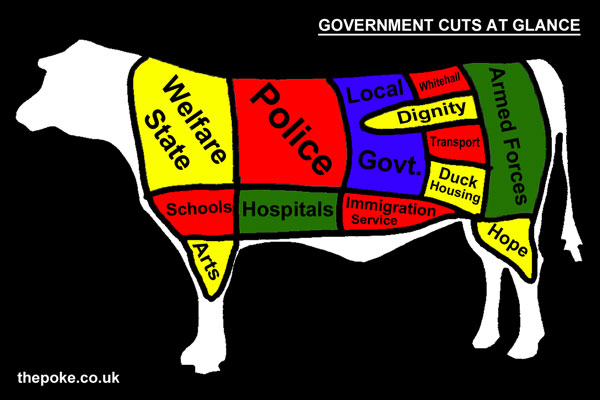
    Government Cuts Hit Local Drug Services


    We all know the state of the country's finances..!

    Greedy politicians have systematically fucked the UK up the ass since time immemorial, but over the last few years things have gotten worse.


    There are cases going through court now, politicians claiming 'expenses' they are not entitled too.. evidently £80,000 a year isn't enough!
    A politician went to prison just today for claiming expenses for a house he didn't even live in!

    Add this to the bankers loaning and mortgaging the public with money that doesn't exist, and the government borrowing money that doesn't exist, the UK national debt now stands at a trillion pounds!
    We are paying £120,000,000 (that's 120 million pounds) a day just in interest!


    Long and short of it, we're fucked!
    local authorities are having they're budgets cut drastically and the services being hit the hardest are grass roots and community organisations, hospitals, charities, police and fire services and DRUG SERVICES!


    Unemployment has hit record levels, people are loosing they're properties and assets yet they're cutting funding to essential services that help people in desperate situations like the citizens advice bureau.

    Personally, I can't find a job, no matter how many interviews I go to, and we are struggling!

    Recently my psychiatrist that I've seen for years, and had a great relationship with, told me she's leaving work.
    She was the consultant at my local Specialist Addiction Unit.

    Budget cuts meant the hospital had decided to merge the alcohol and drugs units, and they wanted her to take a new role overseeing the whole department. No longer seeing patients and basically managing everything.
    She decided it wasn't for her, and gave notice.

    At my last appointment with her we were discussing upping my MST dose, and she had no problem with it, we decided I would try another week at 180mg twice daily and if I couldn't manage we would increase the dose.

    When I went for my next appointment I discovered that I no longer get to see a real doctor, I now have a 'key worker'..
    Basically someone with no qualifications and little experience in the addiction field who has power over me and my treatment.. I was getting flashbacks of the incredible incompetence I experienced at 'Addaction/lifeline' - our local Drug Dependency Unit..  (The name changes every year when the contracts are issued... the only thing that changes is the name, and a lick of paint)

    I left Addaction years ago, sick of the endless stream of useless 'key workers' and demanded a referral to the hospitals SAU, but that's a whole other story!

    Anyway, basically, my 'key worker' (hell, I'm probably more qualified to do her job than her with my NVQ3 counselling diploma and drugs awareness certificates), has absolutely no power to make a decision regarding my medication and treatment so now has to take it to the team... (a weekly meeting of doctors and key workers)
    I've been waiting nearly three weeks now for a decision, I ended up having to meet with the new consultant to get it a 20mg increase!

    I was hoping the MST would help with cravings as well as withdrawals but the dose im on barely keeps me well...


    Now I understand I'm just another junkie, and most people probably don't see addiction services as the highest priority when it comes to hospital budgets, but we are people too, and we deserve equal treatment..

    I have and always will fight for my rights as a patient, it seems sometimes these 'drug services' go out of they're way to stop you getting on with your life, it's difficult to hold a job down when your on daily pick up at the chemist or have to go to a counsellor every two weeks, then see your GP just to get a methadone script!

    These services are set up for your average 'junky' - Im talking about the ones that shoplift and mug old ladies for they're drug money.
    If you decide you want to provide for yourself, hold down a job and contribute to society it seems they will put as many barriers in the way they possibly can.


    Wednesday, 5 January 2011

    Reply From The Government About Diamorphine Prescribing

    Heres the reply I just got from the department of health from the letter I sent last month... pretty vague if you ask me...


    Heres the original letter I sent of: Plese feel fee to edit:


                                                                                    ......./......./2010
    Dear (Insert MP’s name here),
                   
                     I am writing with regards to the current treatment modality of heroin addiction in the UK.
    After personally using heroin for 15 years and having utilising the various treatment options currently available believe I have a fair understanding of the issues surrounding opiate addiction and treatment.
    In my experience, and invariably of many others, maintenance treatments like methadone and subutex, have their place, but for the majority of addicts just don’t work, one report suggests a success rate of just 4% with methadone!

    There are numerous government reports supporting the prescribing of diamorphine for heroin addicts, and the studies and trials that have been done all have much better results regarding health problems and a marked reduction in crimes committed to support habits.

    The UK is also in a better position legally than most other countries as doctors here are allowed to prescribe diamorphine for addiction (alebeit with a home office license) this should be exploited as there are hundreds of thousands of heroin addicts in the UK that can see no way out of their situation.

    After a recent heroin ‘drought’ in the UK, a lot of addicts are questioning the range of treatments available to us.
    Not only is the situation regarding getting into a treatment programme different all over the country, the choices on offer (methadone or subutex maintenance are not suitable for everyone)
    For example, some GP’s will prescribe on the same day, but in other areas users will have to join a drug dependency unit and be co-prescribed with a GP, this on average can take six to eight weeks which is just too long, typically when an addict asks for help, they are at ‘rock bottom’ and need it immediately.
    In our class culture, if a user can afford it, a lot of private doctors will prescribe morphine, diamorphine or benzodiazepines with no questions asked. How is this fair to the average addict?

    I feel (along with many others) we are made to jump through so many hoops it almost isn’t worthwhile. Even if we do what is asked of us we are only going to get a drug which is more addictive than heroin, has more side effects, is a lot harder to detox from and in most cases doesn’t even alleviate 100% withdrawal symptoms and cravings!
    I believe it is time the government looks at other options. Methadone and subutex do not work for the majority of addicts. There are plenty of other options out there and we need to stop looking at addiction with a ‘one size fits all’ attitude.
    Addiction is obviously a very complex, difficult issue to treat, many of us have deep psychological issues, whether it be from childhood abuse, or pre-existing depression that we discovered was manageable through opiates.
    It is proven that opiates alleviate depression. It’s time we were treated with dignity and respect, like any ‘normal’ patient would get.
    Currently, your average heroin user is forced to buy on the streets from unscrupulous criminal gangs that will, as standard ‘cut’ heroin with all kinds of adulterants, putting users at risk from poisoning.

    Not only would being treated properly with appropriate medication put a stop to health problems associated with injecting/smoking adulterated heroin, there would be a marked drop in drug related crime, prostitution, gang affiliated violence and profiteering.
    I believe we need to re-asses the way we currently treat addicts, if users want to use methadone it should be made easier and faster to access, injectable ampoules should be made available to those who want it as needle fixation is a big part of many addicts’ problem.
    Injectable diamorphine should be the standards treatment for addicts that inject and for smokers, in tablet form.
    A clean supply of these drugs would massively reduce the problems classically associated with heroin addiction.
    It would also mean users would be able to lead a relatively ‘normal’ life, get back into employment and attain some level of dignity as the daily routine of getting money, buying drugs would no longer be an issue!
    I realise this is a highly controversial issue and will not change overnight but I believe we need to move out of the stone age when it comes to the treatment of addiction

    Yours Sincerely

    (Name/Or I guess it could be anonymous?)


    Send one off yourself too!


    miltona@parliament.uk
    anne@annemilton.co.uk


    Theresa May's email address (current person responsible for drugs policy/strategy) - mayt@parliament.uk


    Dear Mr ********,

    Thank you for your email of 6 December to Anne Milton about the prescribing of diamorphine to those dependent on drugs.  I have been asked to reply.

    The Department is grateful for your email outlining your experiences of drug dependency and treatment.   
    Although treatment is not a ‘one size fits all’ system, it is important to understand that high quality treatment is the most effective way to address drug dependency.  Having independently evaluated methadone and buprenorphine, the National Institute for Health and Clinical Excellence has recommended that substitute prescribing with either methadone or buprenorphine, delivered in tandem with psychosocial treatments (such as talking therapies), should be the frontline treatment for opioid dependency in the UK.  However, the Department shares your concern that in the past methadone may not have been used appropriately or to the full benefit of patients.  The Department wants to see treatment helping those who are dependent on drugs to full recovery, reducing the harmful effects that drugs have on both individuals and the wider society and enabling them to contribute productively to society.

    On 8 December 2010 , the Department published a new Drugs Strategy, ‘Reducing demand, restricting supply, building recovery: supporting people to live a drug-free life’.  This puts a greater emphasis on supporting those who are drug dependent to achieve recovery and on enabling local community providers to help those who are drug dependent to achieve better outcomes.

    An electronic copy of the strategy can be found on the Home Office website at:


    and by entering the title of the publication in the search bar and following the links.

    You may also be interested to know that the National Treatment Agency for Substance Misuse has recently set up an expert group, chaired by Professor John Strang of the National Addiction Centre, to develop a clinical consensus and protocols for substitute prescribing.  This will focus practitioners and clients on abstinence and long-term recovery, and prevent unplanned drift into long-term maintenance.

    Yours sincerely,

    Edward Corbett
    Customer Service Centre
    Department of Health'